What defines classic furniture
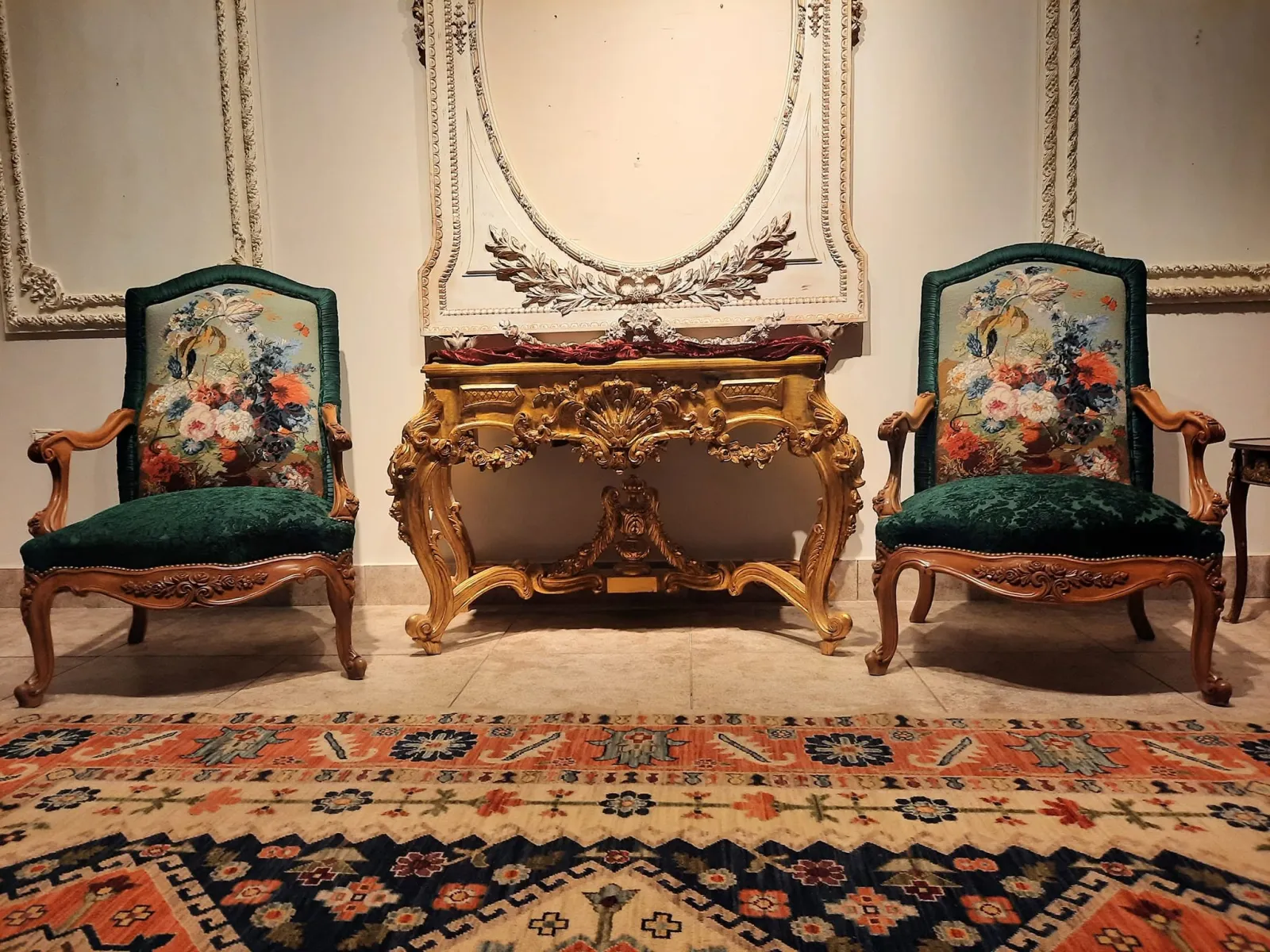
Classic furniture draws on European palace interiors, and you recognise it by its detail first: hand-carved wood, curved legs, gilding or silver leaf, rich fabrics such as velvet and jacquard, and tall button-tufted backs.
- Colours: ivory, gold, dark walnut, burgundy, olive green.
- Scale: large, substantial pieces, usually laid out as coordinated sets.
- Upkeep: carving and gilding need gentle dry dusting, and luxury fabrics need more attention.
Classic works best in formal majlis rooms and reception halls where you want a sense of ceremony and hospitality.
What defines modern furniture
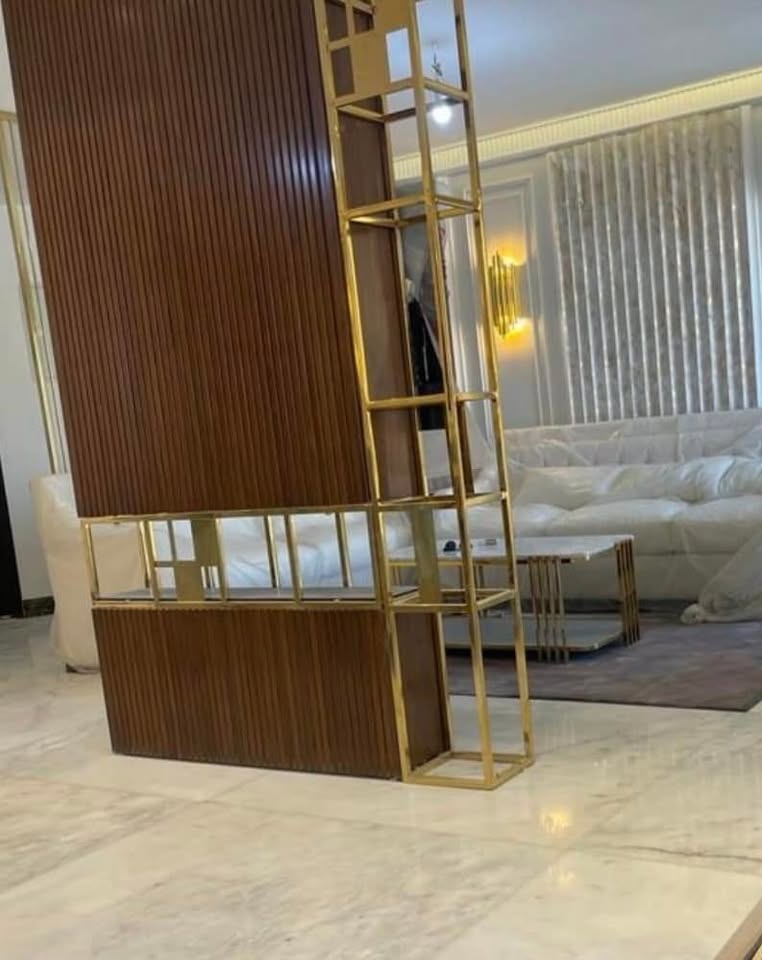
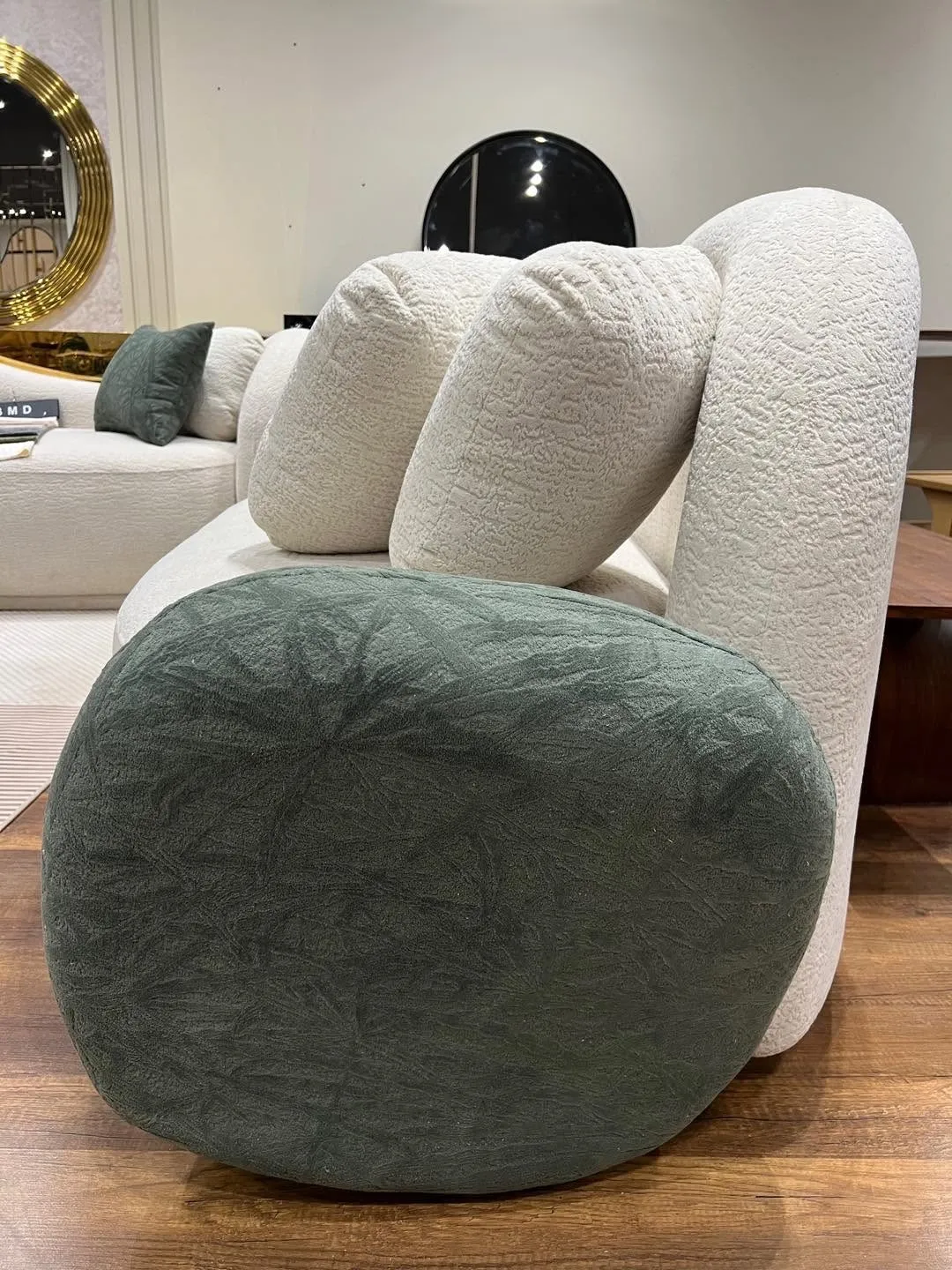
Modern is built on simplicity: straight lines, smooth undecorated surfaces, slim legs or hidden bases, and neutral colours such as grey, beige and white with a single accent.
- Materials: natural wood veneer, matt metal, glass, fabrics with a quiet texture.
- Scale: relatively low pieces that leave visual breathing room and make a space feel larger.
- Upkeep: generally easier, with no carving or tight corners to trap dust.
Modern suits apartments, everyday living rooms and anyone who wants a tidy, easy-to-clean home.
Neoclassic: the smart middle ground
Neoclassic keeps the frame and proportions of classic furniture but tones down the ornament. Expect a simple curved frame, light carving only at the edges, or a thin gilded line instead of full gilding, paired with calm fabric colours.
It is the right choice if you love elegance but not visual heaviness, or if you want a formal majlis that still sits comfortably beside a simpler family lounge in the same house.
How to recognise a good neoclassic piece:
- Classic proportions: a medium-height back and gently rounded or curved arms.
- Ornament limited to one or two points, such as the top rail or the front of the arm.
- Plain or softly patterned fabric in beige, warm grey or muted blue.
- Gilding, if any, is a thin line tracing the frame rather than covering it.
Its practical advantage is that it accepts accessories from both styles, so you can change the room's mood later without changing the furniture.
Which style suits your space
Look at the room's real numbers before your taste:
- Ceiling height: tall classic backs and chandeliers need a high ceiling to look balanced; under a low ceiling the room feels crowded.
- Floor area: classic pieces are wider and deeper, so keep circulation paths of at least 75–90 cm around the set.
- Daylight: bright rooms can carry dark colours and heavy wood; dim rooms benefit from the lighter palette of modern design.
- Finishes: cornices and plaster mouldings sit naturally with classic and neoclassic; plain walls and concealed lighting lean modern.
Which style suits your lifestyle
- Children and pets: choose simple lines and durable, easy-clean fabrics, and keep delicate light fabrics for guest rooms.
- Frequent entertaining: a formal majlis can take classic or neoclassic because it is used intermittently.
- Little time for upkeep: modern needs less and quicker cleaning.
- Long-term thinking: well-made classic furniture lasts for decades and can be reupholstered rather than replaced.
How to mix styles successfully
A good mix looks intentional, not accidental. Practical rules:
- Pick a dominant style for roughly 70–80% of the pieces and use the other style as accents.
- Unify the palette: if the shapes differ, keep colours or wood tones close.
- Repeat a feature piece at least twice: one classic chair in a modern lounge looks lost, a facing pair looks like a decision.
- Link connected rooms with a shared element, such as a fabric colour or metal finish.
- Avoid mixing styles within a single piece unless it was designed that way.
Common mistakes before you order
- Choosing a set from a photo without knowing its actual dimensions.
- Combining two or more wood tones with no plan.
- Furnishing the whole house in one formal style and finding the family room has become a reception hall.
- Choosing fabric colour from a phone screen; colours shift a great deal between daylight and indoor lighting.
- Ignoring curtains, rugs and lighting when deciding the style, although they shape a room's impression as much as the furniture.
Before deciding, collect photos of rooms you like and look for what they share: colour, lines, or the amount of ornament. That common thread is your real style, whatever label it carries.
At Arti Design we make classic pieces with hand carving, gilding and upholstery, modern pieces with clean lines, and everything to the size of your space, with wood, fabric and colour approved from samples before production.