Choose the top for its job, not for the photo
A family dining table takes hot dishes, juice and knives every day, while an entrance console sees little more than dust and keys. Before picking a material, decide: is the table for daily meals or for guests? Are there children at home? Will hot dishes go straight onto it? And are you happy for the surface to show its use over time, or do you want it to stay exactly as new?
Keep the basic dimensions in mind too: dining tables stand about 75 cm high with 75 to 90 cm of clearance around them for movement and pulling out chairs. A coffee table sits close to the sofa seat height or slightly lower, about 40 to 45 cm from the sofa. Consoles are usually 75 to 85 cm high.
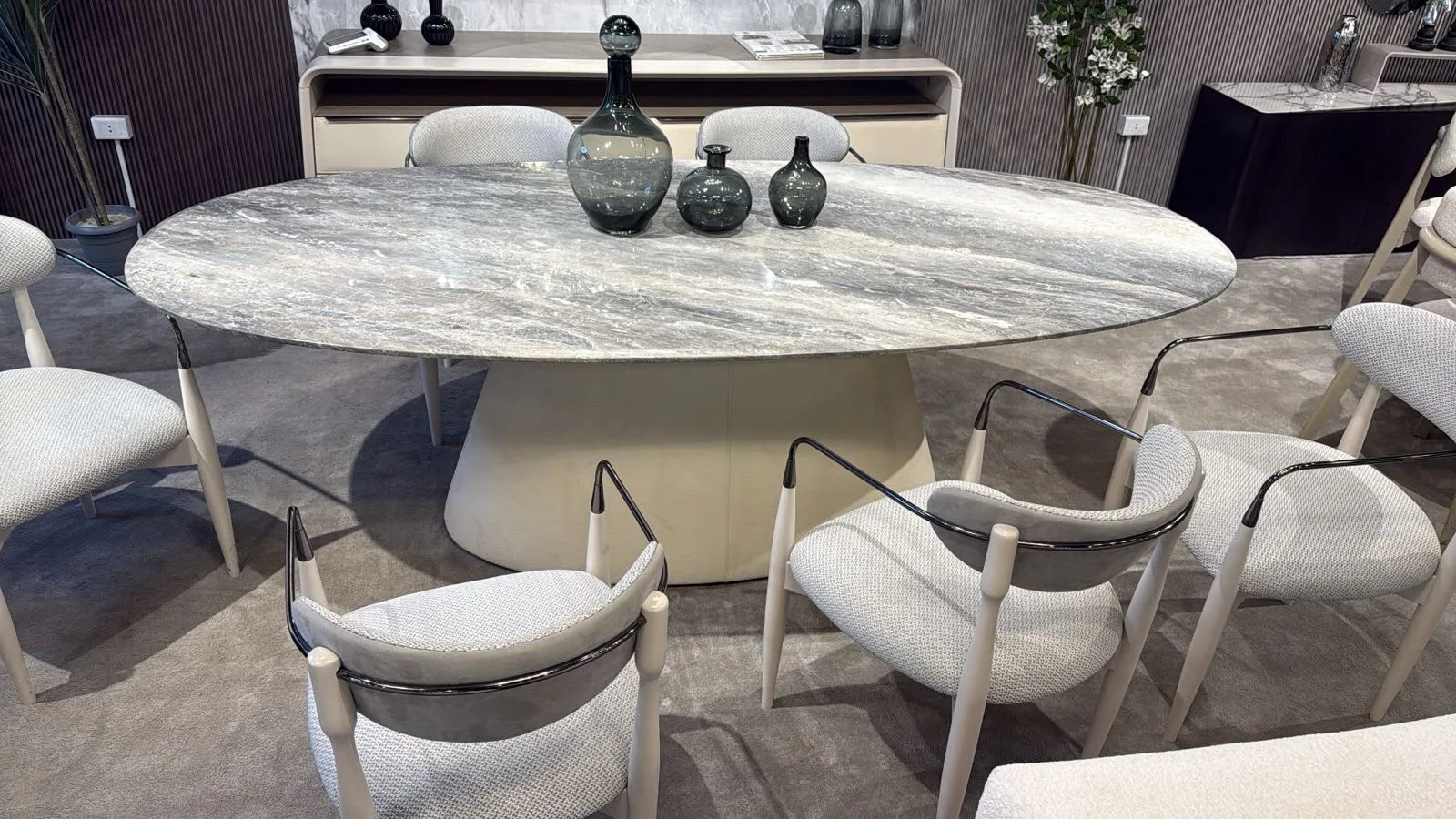
Natural marble
Marble is a natural stone with veining that never repeats, giving a richness nothing else imitates. But it is a calcium-based stone that reacts with acid: lemon, vinegar, juices and fizzy drinks leave dull marks called etching, which are damage to the surface rather than a stain on it. Oils soak into its pores if it is not sealed.
- It needs a sealer, renewed periodically depending on use.
- Polished marble shows etching more; honed marble hides it better.
- It is heavy, so it needs a strong base and planning for transport and installation.
- Sharp tools scratch it, and thicker slabs are less prone to chipping at the edges.
Granite
Granite is harder than marble and handles scratches and heat well, and household acids affect it far less. Its pattern is usually speckled rather than long veins, so it looks less classic than marble. Some light-coloured granites are porous and benefit from sealing too. It is a very practical choice for heavily used dining tables.
When choosing granite, look at the whole slab rather than a small sample, since the spread of grains and colours varies from slab to slab even within one type. A polished finish brings out the colours, while a honed or textured finish looks calmer and hides fingerprints.
Engineered quartz
Quartz is an engineered stone made from quartz particles and a binder. Its surface is non-porous, so it resists stains and needs no sealing; colours are consistent, and many designs imitate marble veining.
Its weakness is heat: the binder can discolour or be damaged by very hot pans placed directly on it, so trivets are essential. Some types are also not recommended for spots in long exposure to direct sun.
Glass
Glass lightens the visual weight of a room and suits small spaces. For furniture it should be tempered safety glass, which is stronger and breaks into small blunt pieces, with polished edges.
- It shows fingerprints and dust clearly and needs frequent wiping.
- Edges are the weak point; a side knock is more dangerous than pressure on the top.
- It handles warm dishes, but trivets are still better.
- With small children, watch for sharp corners and choose rounded edges.
Wood
Wood is warm to touch and to look at, and it can be sanded and refinished years later, something stone cannot offer. But it reacts to standing water and heat: cold glasses and hot dishes leave white or dark rings if the finish is weak. Scratches show, though they become part of its character with time. A polyurethane finish greatly improves its resistance for dining use.
A wide wooden top moves with humidity, so it must be fixed to its base in a way that lets it expand and shrink, or it will split in air-conditioned rooms. Real veneer on a stable core is a good alternative for very large tables, since it moves far less than solid wood.
Quick comparison: stains, scratches and heat
- Stains: quartz is strongest, then sealed granite, then glass, then finished wood; marble is the most sensitive.
- Scratches: granite and quartz are toughest, then marble; wood and glass show scratches most.
- Heat: granite is strongest, then marble; quartz and wood always need trivets.
- Maintenance: quartz and glass need least; marble needs periodic sealing; wood can be refinished.
Pairing with classic and modern interiors
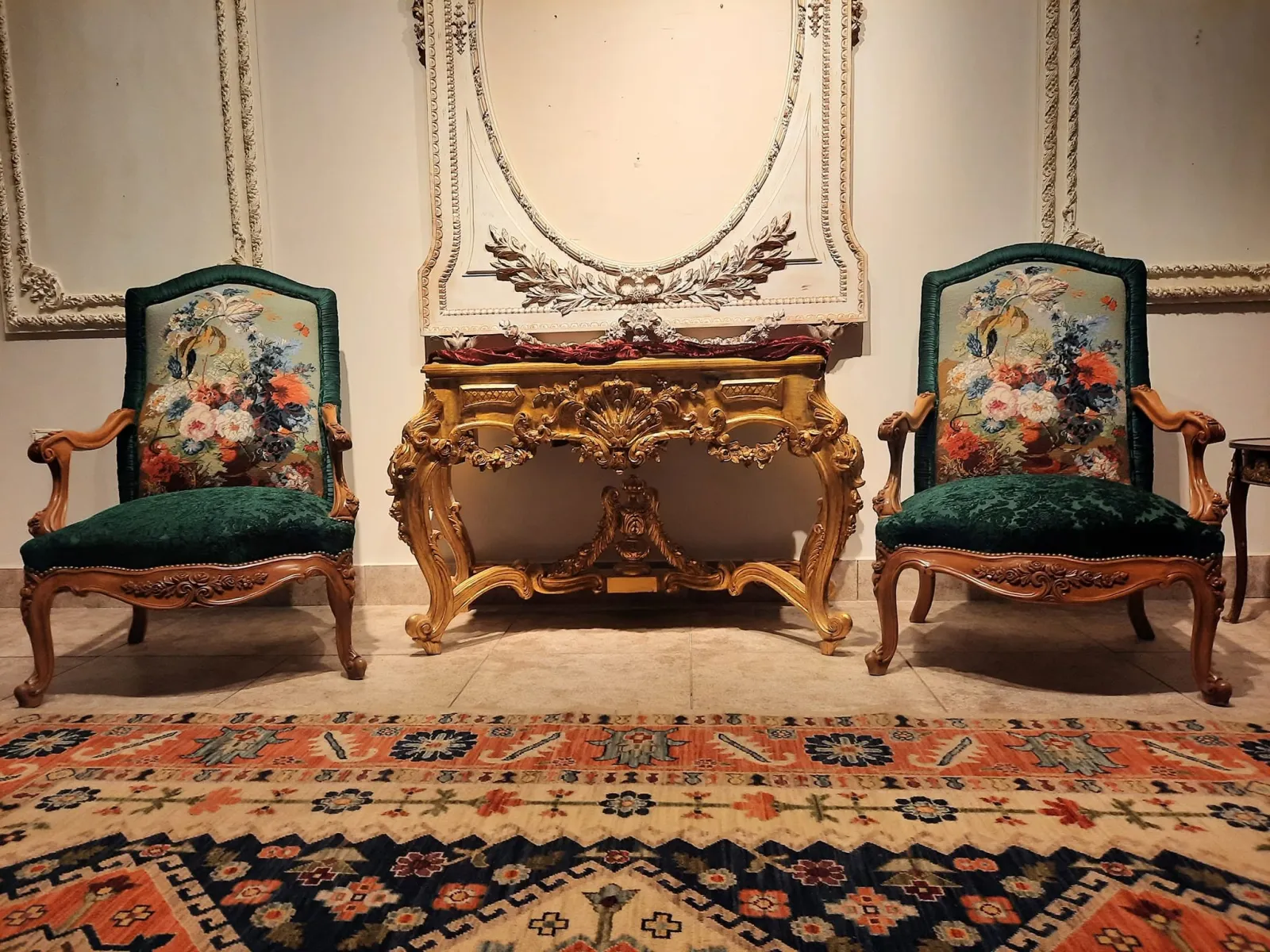
- Classic: boldly veined marble on a carved or gilded wooden base, or dark wood with a gloss finish. Shaped, moulded edges echo the carving.
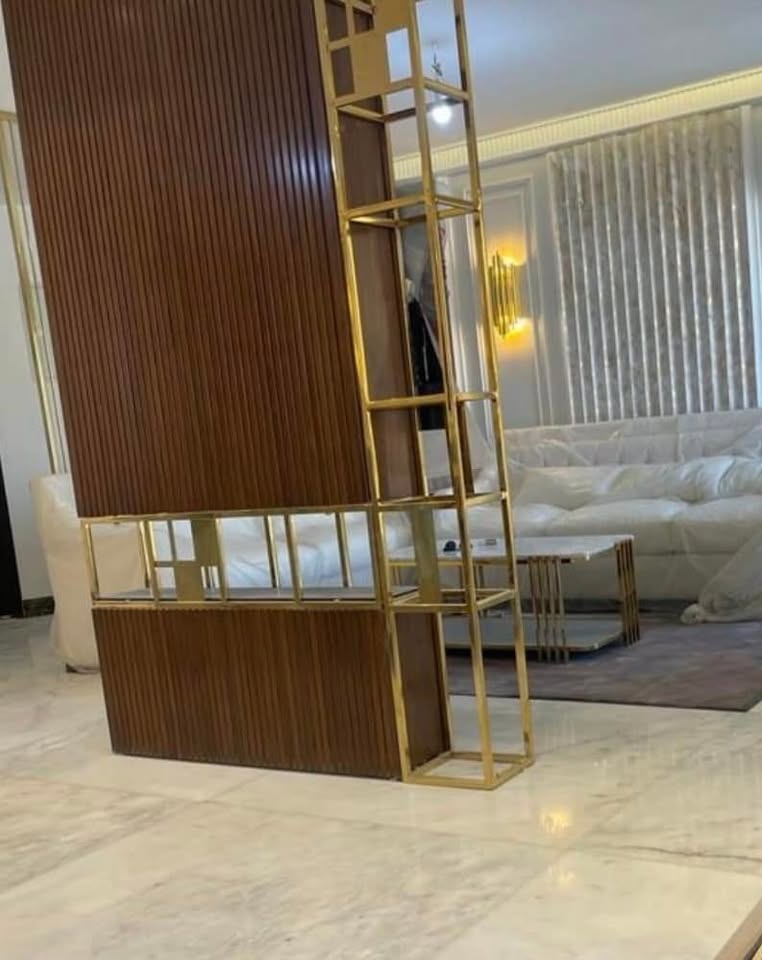
- Modern: honed marble or quartz with thin straight edges, or glass on a simple metal or wooden base.
- Do not combine more than two stones in the same open space, or the veining will compete.
- Relate the top to the floor: pale marble on a pale marble floor can disappear, while deliberate contrast looks better.
At Arti Design, tables are made to the size of your space, wood and finish are approved with samples before production, and you can book a free survey visit to set the dimensions on site.