Think in layers, not in a single fitting
A room lit from one ceiling point looks flat and casts harsh shadows on faces. Good planning combines three layers that work together or separately:
- Ambient lighting: lights the room evenly, such as downlights and concealed ceiling lighting.
- Task lighting: aimed at a specific activity such as reading, dining or cooking.
- Accent lighting: picks out an artwork, a wall or a piece of furniture and adds depth and warmth.
Put each layer on its own switch, ideally with a dimmer, so the same room can move from a formal reception to a quiet family evening.
Chandelier size and height
A common sizing rule: add the room's length and width in metres, and the result is the approximate diameter in centimetres. A 5 × 6 m room suits a chandelier of roughly 110 cm. Treat this as a starting point and adjust for ceiling height and how dense the fitting is.
- Over a dining table: the chandelier diameter should be between half and two-thirds of the table width, staying at least about 15 cm inside the table edge on each side.
- Dining chandelier height: its bottom roughly 75–90 cm above the tabletop.
- In living rooms and majlis spaces: keep the bottom at least 210 cm above the floor where people walk.
- For high ceilings and stairwells: choose a taller or tiered chandelier, and as a practical estimate add about 7–8 cm of drop for every 30 cm of ceiling above 240 cm.
- A long majlis may need two medium chandeliers along the axis of the seating instead of one oversized piece.
Concealed lighting
Concealed lighting in gypsum or behind cornices and shelves gives soft indirect light that makes ceilings feel higher.
- Set the strip back far enough from the edge that individual light points do not show on the wall.
- Use it to outline the ceiling, behind a TV panel or under kitchen wall cabinets.
- Do not rely on it as the only light; it is more decorative than functional.
- Coordinate its position with the curtain track before the gypsum work.
Lamps and close-range light
Table and floor lamps add warmth at eye level, and they are the most neglected layer.
- Place a lamp beside each separate seating zone in the living room.
- Size side-table lamps so the bottom of the shade sits near the eye level of a seated person and the bulb is not visible.
- In bedrooms: a lamp or wall light on each side of the bed, with a switch within reach.
- Light fabric shades spread soft light; opaque ones direct light downwards for reading.
Colour temperature
Measured in kelvin, it decides whether light looks warm and yellow or cool and bluish.
- 2700–3000 K: warm, suited to living rooms, majlis spaces, bedrooms and dining rooms, and flattering to wood, gold and fabrics.
- 3500–4000 K: neutral, suited to kitchens, dressing rooms and studies.
- 5000 K and above: cool, fine for work areas and storage but clinical in a home.
- Keep one colour temperature per room; mixing warm and cool in the same ceiling is obvious.
- Choose bulbs with a high colour rendering index so fabric and wood colours look true.
Lighting classic salons and dining rooms
- The crystal chandelier is the centrepiece, so keep other light quieter so they do not compete.
- Add wall sconces in symmetrical pairs on either side of a mirror, fireplace or painting.
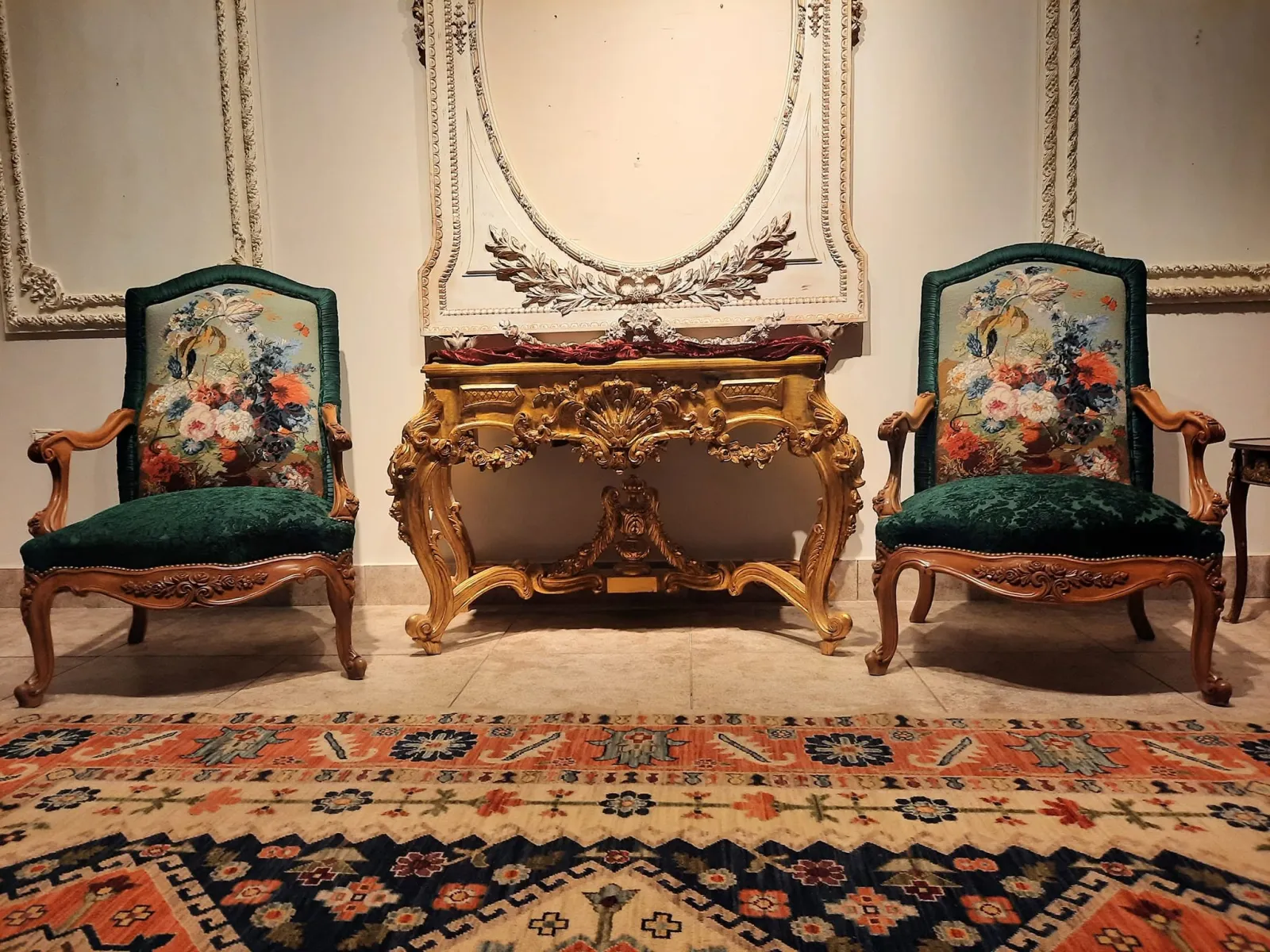
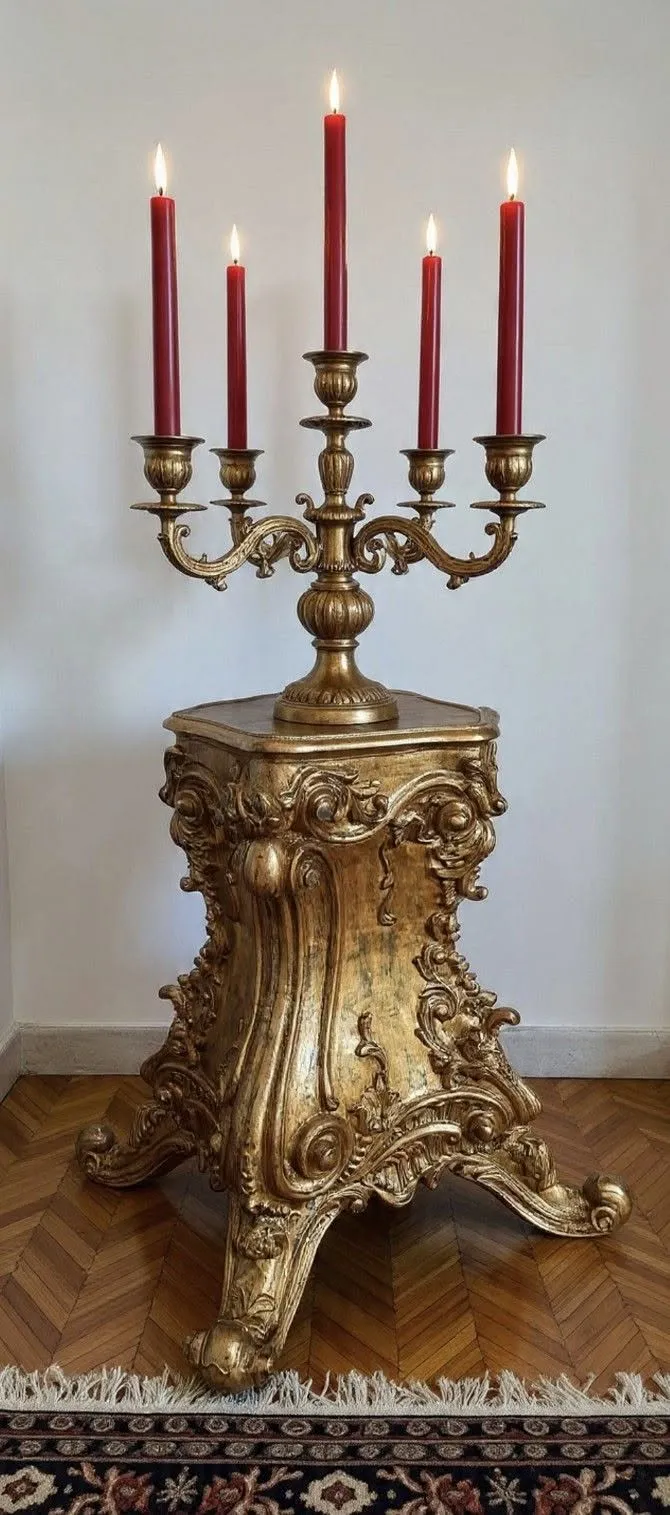
- Spotlights aimed at carved and gilded pieces bring out detail and make the gold glow.
- In the dining room: the chandelier on a dimmer, with accent light on the buffet or display cabinet.
- Use warm light with gilding and ivory; cool light makes gold look dull and greenish.
Common mistakes
- Rows of downlights in a regular grid, like an office ceiling.
- A chandelier too small for a large majlis, or hung so low it blocks sightlines between guests.
- No dimmers in living rooms and majlis spaces.
- Fixing light positions before the furniture layout is known, so the chandelier misses the centre of the dining table.
- Downlights directly above seats, shining into eyes and onto faces.
- No low night lighting in corridors and bedrooms for moving around without switching on the main lights.
Plan lighting with the furniture layout
The chandelier position follows the dining table and the lamp positions follow the sofas, so the furniture layout must come before the electrical work. Arti Design makes furniture to the size of your space, and a free survey visit can be booked to fix the furniture plan early, before electrical and gypsum work begins.