Why the finish decides how a piece looks and lasts
The finish is the layer your hand touches and your eye sees, and it is what protects wood from moisture, stains and scratches. Two pieces in the same wood and design can look completely different because of the finish, and one can outlive the other by years. So do not choose on looks alone; ask where the piece will stand, how often it will be touched, and whether it will meet water or heat.
Gilding: gold leaf or gold paint
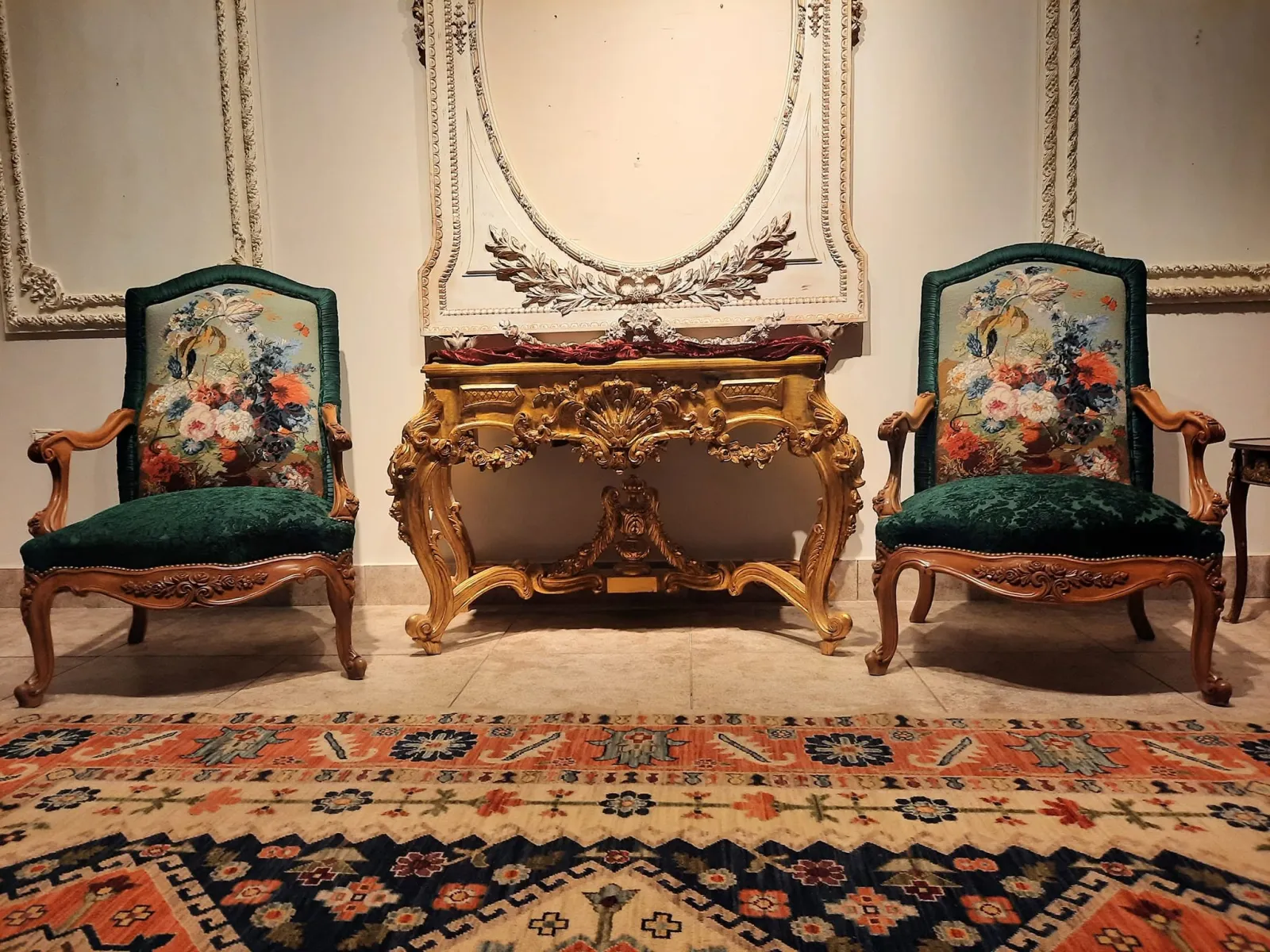
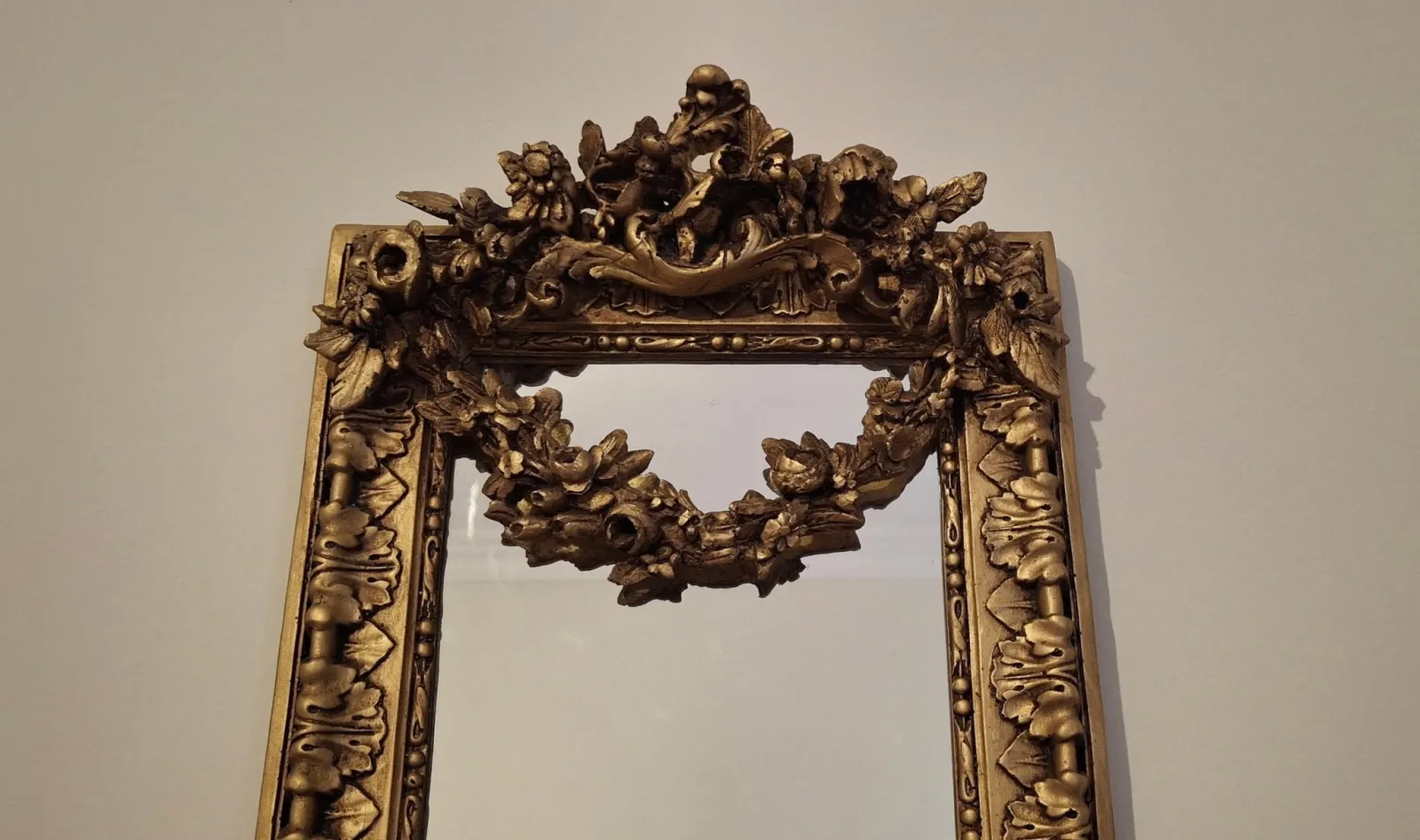
Leaf gilding means laying extremely thin metal leaves by hand onto a prepared surface, then smoothing and protecting them. There is genuine gold leaf, and there is imitation metal leaf in a gold colour that needs a clear protective coat or it will oxidise and darken. Leaf gives a lively metallic reflection that shifts with the light and brings out the detail of hand carving on classic furniture.
Gold paint is a coating containing metallic pigment. It is quicker, cheaper and easier to touch up, but flatter, and can look uniformly artificial.
How to tell them apart: look closely at leaf and you will see faint overlap lines between the square leaves; paint may show brush or spray texture and a softer sheen.
When to choose which? Leaf belongs on the main classic pieces in the majlis and living room, where guests stand close and notice detail. Paint is acceptable on small parts, areas far from the eye, or when the budget is tight. Either way, ask for gilding balanced against the wood and fabric colours; gold on every surface makes a piece look less refined, not more.
Lacquer
In the regional market, lacquer means a coloured coating sprayed in several coats with sanding in between, usually on MDF because its surface is smooth and grain free. It gives a perfectly even colour, from high gloss to matte, and suits doors, wardrobes, modern pieces and colour-finished classic designs.
Its weak points are edges and corners, which can chip under impact. Repair usually means respraying in a proper workshop, so ask how many coats are applied and what the final protective layer is.
Polyurethane and clear coats
Polyurethane forms a tough protective film over wood or over colour. It resists water, stains and moderate heat better than traditional varnish, making it the practical choice for dining tables, coffee tables and heavily used pieces.
It can be clear to show the grain, or applied over colour. A good finish is even, with no bubbles, runs or trapped dust specks.
Some clear polyurethane finishes yellow slightly with time and sunlight, which shows clearly over white and pale colours. For a white or very light piece, ask for a non-yellowing type and, if possible, look at a sample that has aged for a while.
Matte, gloss and in between
- Gloss: reflects light and gives depth and richness to colour, wipes clean easily, but shows fingerprints, dust and fine scratches clearly.
- Matte: calm and contemporary, hides fingerprints and small flaws better, though repeated rubbing in one spot can leave a shiny patch.
- Satin: a practical middle ground for homes with children, easy to wipe while hiding marks.
In very bright rooms or near windows, gloss reveals every flaw in the surface, so the preparation underneath must be excellent.
Antique, patina and distressed effects
Antique finishes imitate the passage of time: a darker glaze in carved recesses, edges burnished as if handled for years, or deliberate fine crackle in the paint. They give classic pieces depth and avoid a harsh brand-new look.
The difference between skilled distressing and a defect is consistency. A deliberate effect follows logic, concentrating where hands touch and dust settles, and matches across every piece in a set. Random blotches or big differences between two chairs are not patina.
Caring for each finish
- Gold leaf: a soft dry cloth only, with no water, cleaners or alcohol; moisture and friction remove the leaf.
- Lacquer and polyurethane: a slightly damp microfibre cloth, dried immediately.
- Avoid silicone polishing sprays; they leave a film that complicates any future refinishing.
- Avoid cleaners with ammonia or strong solvents.
- Use coasters and trivets for hot dishes, even on polyurethane.
- Matte surfaces: wipe with light even strokes and never scrub one spot hard.
Approving a finish before production
- Ask for a sample on the same wood or board the piece will be made from; colour changes from one material to another.
- View the sample in daylight and under your own home lighting.
- Specify the sheen level by name and sample, not by description alone.
- For gilding, ask directly: leaf or paint, and is it sealed?
At Arti Design, colour and finish are approved with samples before production, and gilding and carving on classic pieces are done by hand.