Density and firmness are two different numbers
Many people confuse foam density with firmness. Density is the weight of a cubic metre of foam and tells you how long it will last: the higher it is, the longer a seat keeps its shape without sagging. Firmness is how strongly the foam resists pressure, and it decides how the seat feels: soft, medium or hard.
Foam can be high density and soft at the same time, and it can be hard yet cheap and collapse within a year. So ask for both figures. For everyday seating, foam of at least around 30 kg per cubic metre is usually recommended, and higher lasts longer; back cushions can be lighter.
High-resilience foam springs back quickly and resists sagging, which makes it the right choice for seats. Memory foam moulds slowly to the body and softens in warm rooms while stiffening in cold ones, so it works as a thin top layer rather than a whole seat.
Cushion layers: foam, fibre and feather
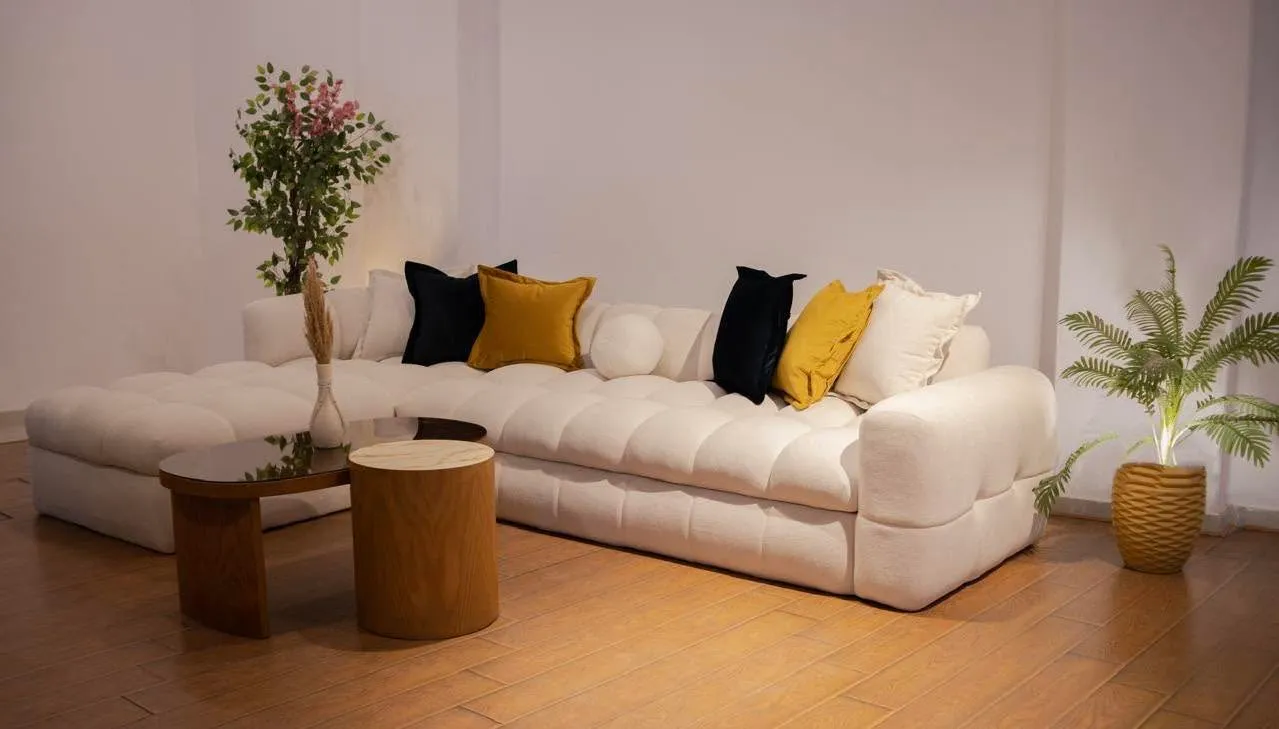
A good seat cushion is rarely a single block of foam. The common build is a durable foam core wrapped in fibre, which gives a soft rounded edge and a warmer feel.
- Fibre only: soft and cheap, but it clumps and loses volume quickly unless held in stitched channels.
- Feather or feather and fibre blend: luxurious and very comfortable, but needs daily plumping and shows where people sat.
- Fibre-wrapped foam: easiest to live with, keeps a tidy shape, and suits most homes.
- Foam with a feather topper: stable yet soft, with occasional light plumping.
Springs and webbing beneath the seat
What sits under the cushion matters as much as the cushion.
- Sinuous springs: zigzag wires running front to back; common and good when closely spaced and firmly fixed to the frame.
- Pocket springs: individual coils each in a fabric pocket, giving even support without passing movement to the person beside you.
- Elastic webbing: light and springy, but it must be high quality and properly tensioned or it will slacken.
- Hand-tied springs: traditional in fine classic furniture, giving a cohesive feel that lasts many years.
Lift the cushion and press the seat base by hand: you should feel even resistance with no creaking and no soft spots.
Seat depth and height
Correct dimensions matter more than soft foam.
- Sofa seat height: usually 40 to 45 cm from the floor. Lower than that is hard for older people to rise from.
- Usable seat depth: 50 to 60 cm for upright sitting, more than 60 cm for lounging.
- Dining chairs: seat height typically 45 to 48 cm.
- The simple test: sitting back against the backrest, leave about two or three fingers between the seat edge and the back of your knee, with feet flat on the floor.
If your family includes people of very different heights, a medium depth with extra back cushions works better than a very deep seat.
Backrest, arms and seating angle
Back height decides whether your head and shoulders are supported. A low back looks sleek in modern designs but is less comfortable for long sitting. A slight backward tilt is relaxing; too much makes standing up hard.
Arms should support the forearm without lifting the shoulder. In a majlis where guests sit for hours, a medium, fairly firm back beats very soft loose cushions.
Loose back cushions give flexibility: add one for someone who needs less depth, remove it for someone who wants to stretch out. A fixed back upholstered onto the frame always looks tidy but does not let you adjust the seat.
How to test a sofa before buying
- Sit for at least five minutes the way you sit at home, not for a few seconds.
- Try both the end and the middle; the middle is often the weak point.
- Stand up without pushing on your hands, an important test for older family members.
- Press the cushion edges and corners; they should recover quickly.
- If possible, look at a used piece of the same model to see how it settles over time.
- Ask in writing for the foam density and the spring type.
Common mistakes and choosing by room
- Picking the softest seat in the showroom: excess softness turns into sagging and back pain within months.
- A very deep seat in a living room used by older relatives.
- Ignoring sunlight: foam near windows degrades faster, and fabric does not fully shield it from heat.
- Guest majlis: medium to firm seats and a supportive back.
- Family living room: medium firmness with a soft top layer and slightly more depth.
At Arti Design, sofas are made to the size of your space, and you can book a free survey visit to take measurements on site.