Start from the anchor piece
Accessories complete furniture; they do not make up for what is missing. Before buying anything, identify each room's anchor: the sofa in the lounge, the table in the dining room, the bed in the bedroom. Then choose accessories that support it in colour and style rather than compete with it.
Pick one or two colours from the room's palette for accessories and repeat them in more than one spot so the room feels connected.
Do not buy accessories all at once before the furniture, curtains and rugs are in. Live in the space for a few weeks, notice where the eye falls and where a gap genuinely feels empty, then buy for those spots specifically. Pieces with a story, such as a family gift or something from your travels, give a home a character that shelf-fillers never will.
Art: height and size
- Hang a picture so its centre is about 145–155 cm from the floor, a comfortable eye level.
- Above a sofa or console, leave roughly 20–25 cm between the bottom of the frame and the top of the furniture.
- Art above a sofa, single piece or group, should span about two-thirds of the sofa's width; a very small picture looks lost.
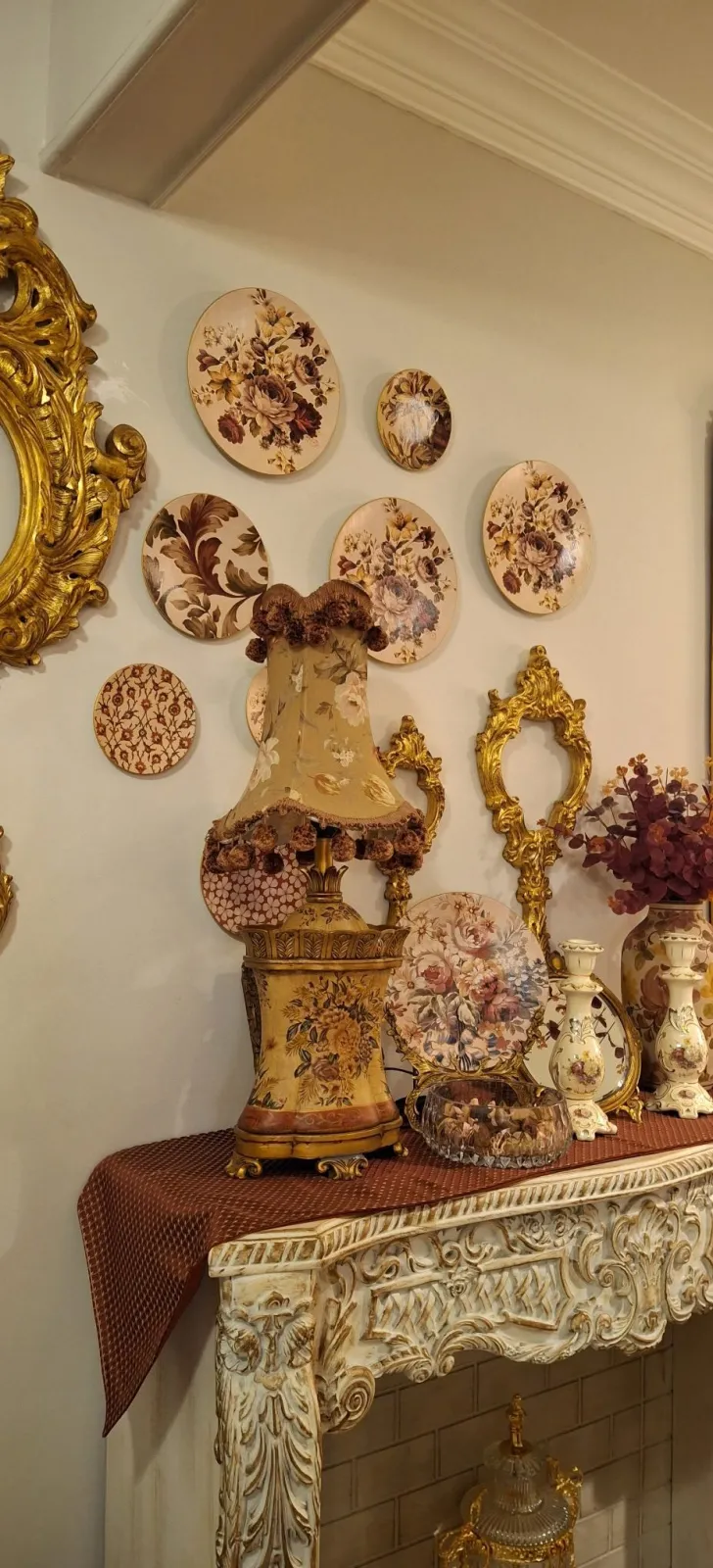
- For a gallery wall, keep equal gaps between frames, and cut paper templates and tape them to the wall before drilling.
- Above a bed, choose a landscape piece or two side by side, no wider than the headboard.
- Treat the frame as part of the decision: a wide frame with a light mount gives a small picture more presence.
- Where possible, aim an accent light at the main piece, and do not hang valuable work facing direct sun.
Mirrors: light and space
- Place a mirror where it reflects something worth seeing: a window, a chandelier or a painting, not a door or a cluttered corner.
- A mirror opposite or beside a window multiplies daylight.
- In the entrance, a mirror above the console is practical and widens the space visually.
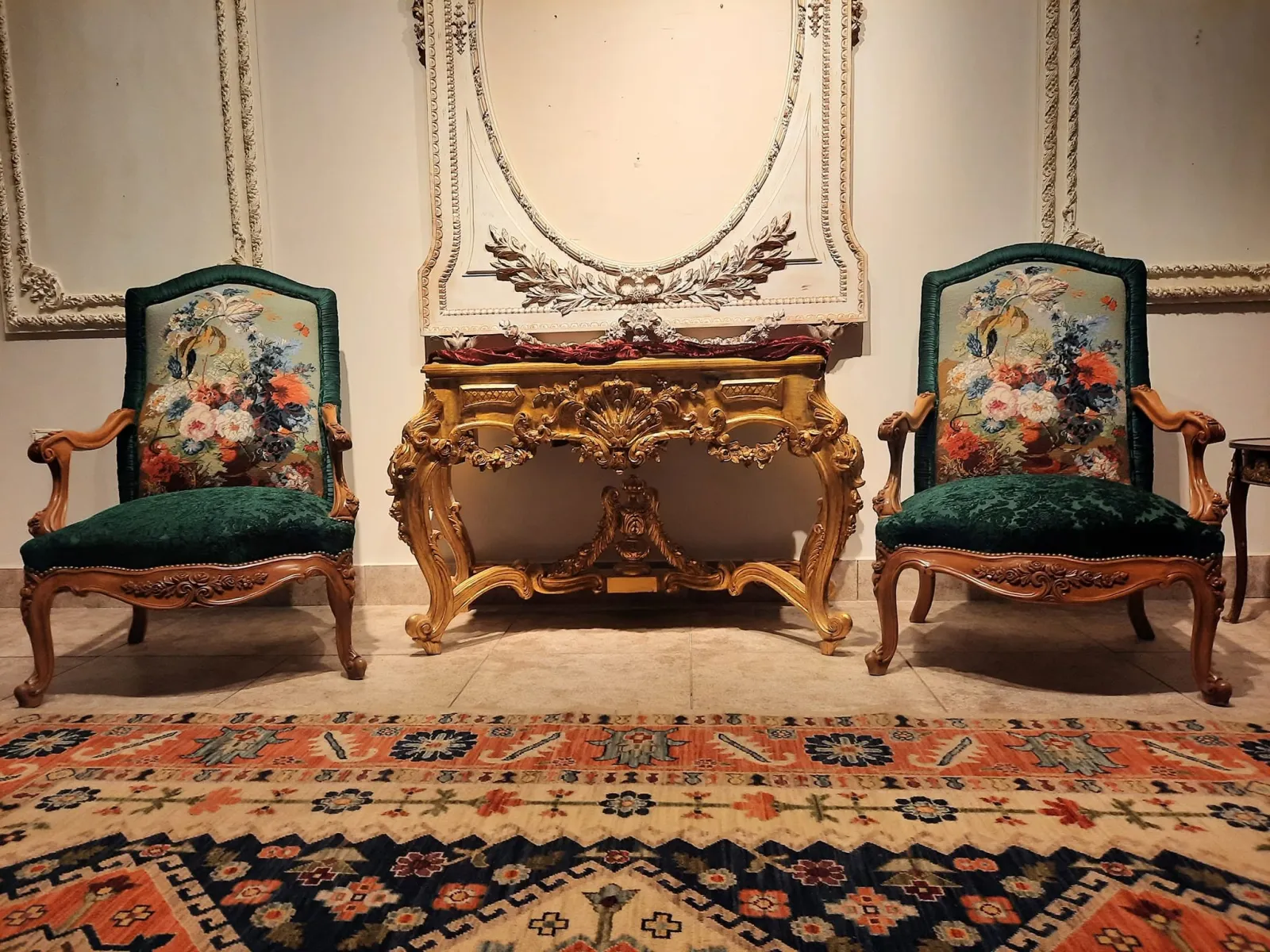
- In a classic majlis, a mirror with a carved or gilded frame becomes the artwork itself.
- Avoid a mirror directly facing the bed if it bothers you on waking.
Vases, trays and tableware displays
- On the coffee table, a tray gathers small items into a single unit.
- Vary heights: one tall vase, one medium piece and one low piece.
- On the dining table, keep the centrepiece low so guests can see each other.
- In a sideboard or display cabinet, show your best serving ware in coordinated groups with space between them, plates standing at the back and smaller pieces in front.
Cushions and textiles
- On a three-seater, two to five cushions is usually enough.
- Combine plain and patterned fabrics, and two different textures such as velvet and linen.
- Arrange from larger at the ends to smaller towards the centre.
- Let cushion colours pick up a colour already in the rug, curtains or a painting.
- Swap covers between summer and winter to change the mood without major cost.
Odd numbers and scale
Groups of three or five look livelier and more natural than pairs, because the eye moves around them instead of splitting them in half.
- In a group of three, vary the heights to form a triangle.
- Keep one shared element across the group: colour, material or style.
- Respect scale: a small side table needs small objects, and a large wall needs one large piece rather than dozens of small ones.
Avoid overcrowding
- Leave roughly a third of every surface empty.
- A practical rule: for every new piece that comes in, one goes out.
- Store some accessories and rotate them by season instead of displaying everything.
- If you cannot say why an object is where it is, it is probably surplus.
Classic versus modern accessories
- Classic: carved and gilded frames, candelabra, patterned porcelain vases, wall clocks, rich fabrics such as velvet with tassels.
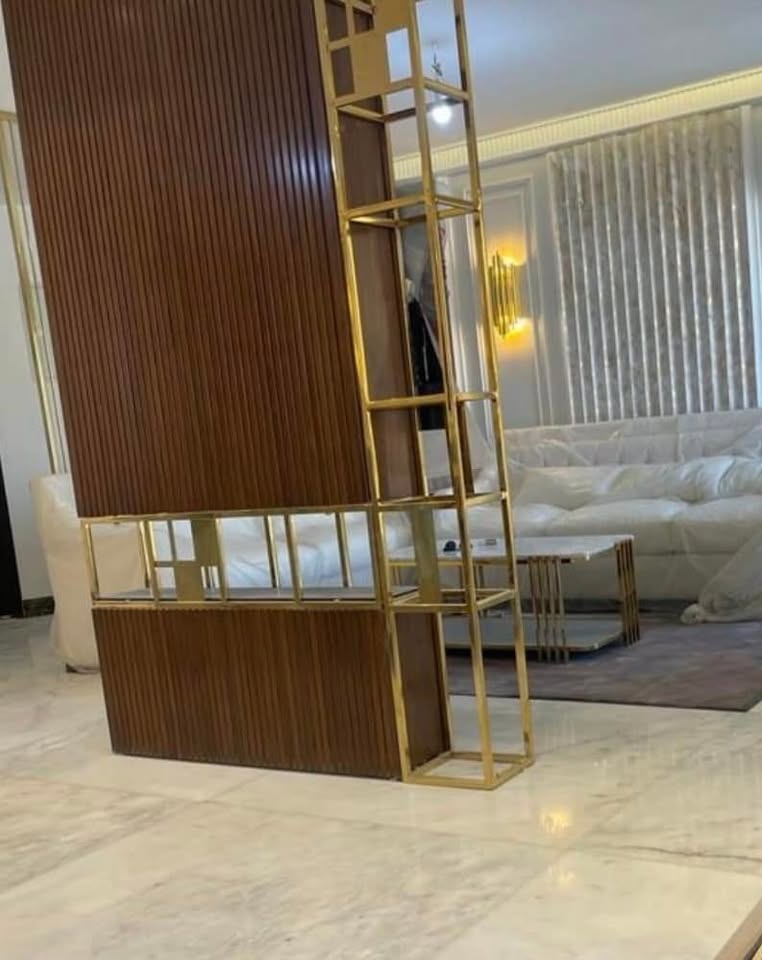
- Modern: simple geometric forms, matt ceramics, a single metal accent, abstract art with broad fields of colour, and fewer pieces overall.
- Neoclassic: a thin gilded frame around a contemporary painting, or a classically shaped vase in a calm solid colour.
If you choose carved and gilded classic furniture from Arti Design, pick accessories after the wood and finish samples are approved so the gold and wood tones match.