What defines a classic colour palette?
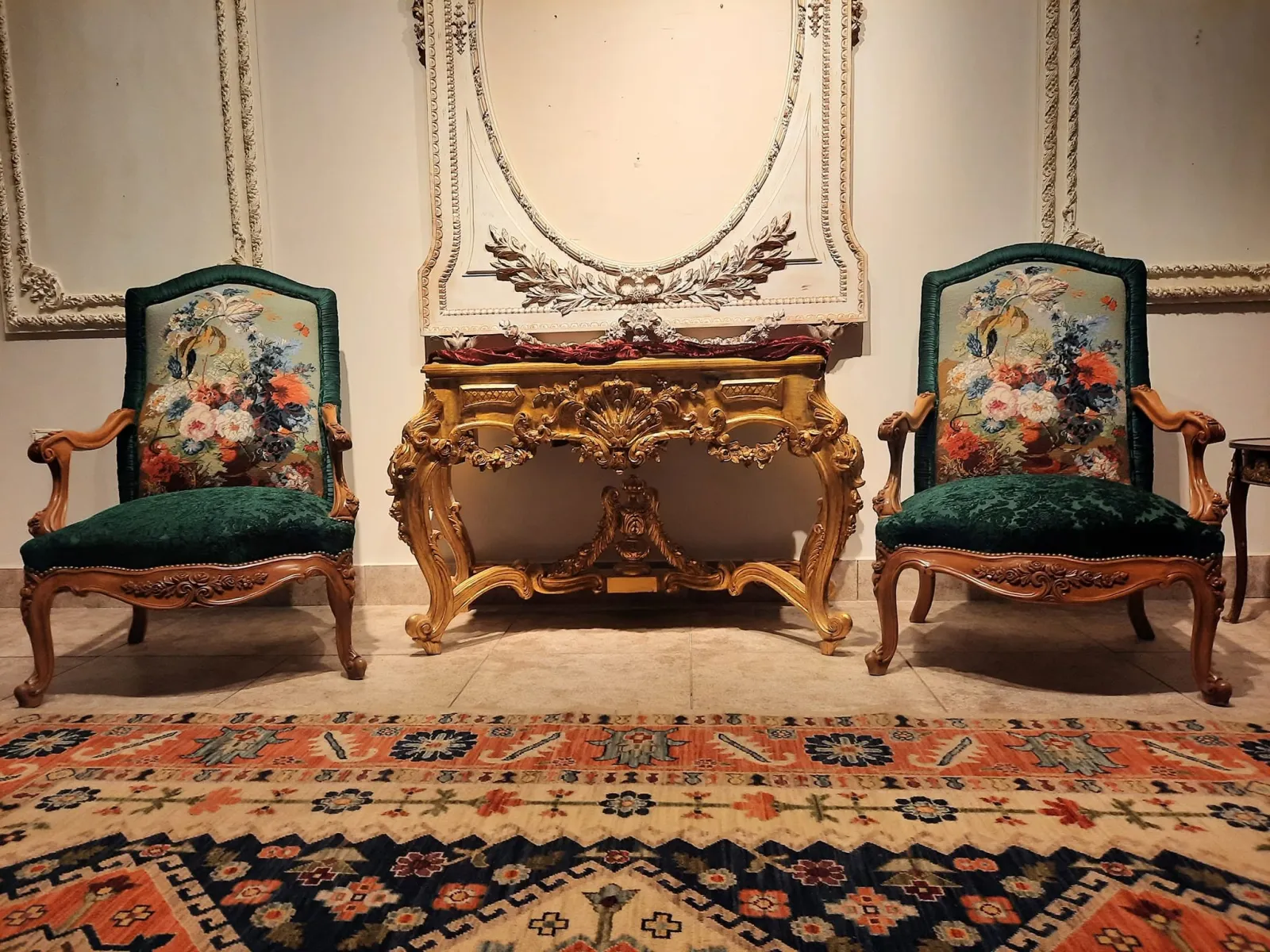
Classic furniture is rich in detail: hand carving, gilding, patterned or velvet fabrics. So its palette rests on one simple principle: the more detail a piece carries, the calmer the background it needs. A successful scheme usually has a warm light base, one deep colour for richness and one dominant metal such as gold or champagne.
Before choosing shades, define the space. A formal majlis can take deeper colour and more shine because it is used for occasions, while a family living room needs lighter tones and fabrics that stand up to daily use. Consider the room's size and daylight too: deep shades need generous space and enough windows or well-planned lighting.
Ivory, beige and cream: the safe base
These shades dominate classic living rooms and majlis spaces because they reflect light and bring out carving and gilt.
- Ivory suits walls and sofas in large majlis rooms and makes them feel more spacious.
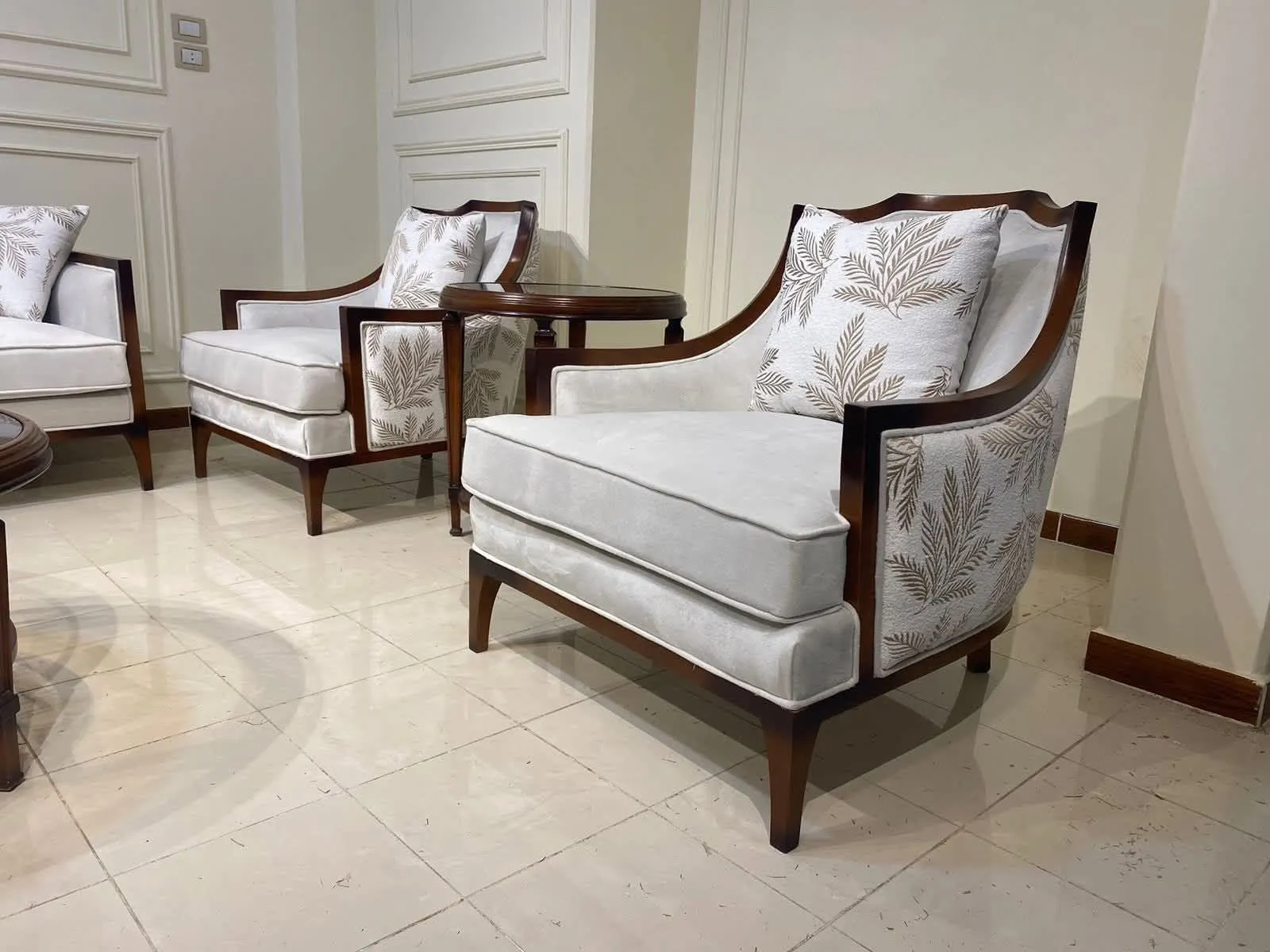
- Sandy beige copes better with daily use and suits family living rooms.
- Warm cream works with beige marble, whereas a cold bright white looks out of place beside it.
- Avoid putting walls, sofas and curtains in exactly the same shade; leave a step or two of contrast so the pieces do not dissolve into the background.
Gold, champagne or silver?
The choice of gilding sets the personality of the whole room.
- Bright yellow gold: grand and obvious, suited to formal majlis rooms and large pieces, and needs a very quiet backdrop.
- Antique matt gold: more restrained, easier to combine, and less showy.
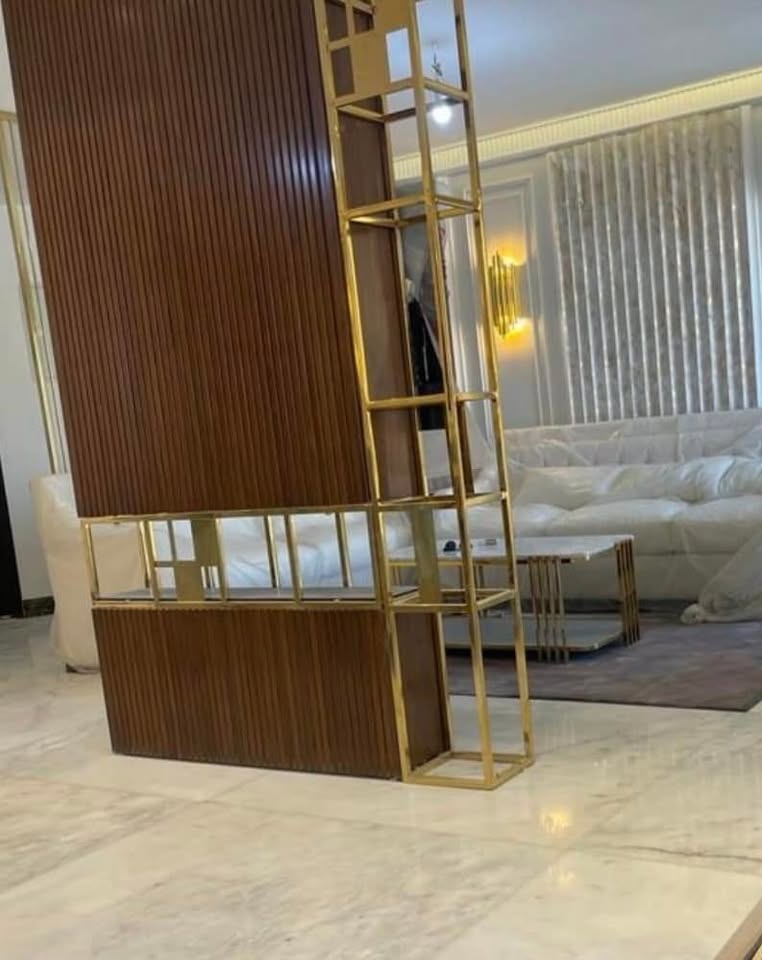
- Champagne: between gold and silver, for a lighter, more current classic look, and pairs well with warm grey.
- Silver: suits cool palettes of grey, navy and white, and rarely works with yellowish beige.
The rule: pick one dominant metal for the furniture; a second metal may appear only in a small item.
Deep green, navy and burgundy
Deep tones give classic rooms their presence, but they need measured use.
- Emerald or deep olive green: glows next to gold and suits velvet sofas or curtains.
- Navy: calm and formal, excellent with antique gold or silver, and well suited to men's majlis rooms and studies.
- Burgundy and wine: warm and bold, best on single armchairs, cushions or a rug rather than every surface.
Put the deep colour on one large element, such as a sofa set, curtains or a feature wall, then echo it in small touches. Spreading it across every piece makes the room heavy and dark.
Balancing gilding with fabrics and walls
The classic mistake is stacking shine: gilded wood, glossy fabric with gold thread, gilded wallpaper and a crystal chandelier all in one room.
- If the sofa frame is heavily gilded, choose a plain or lightly patterned fabric.
- If the fabric has gold patterning, reduce the gilding on the wood or make it matt.
- The wall behind a heavily carved piece is best plain or with light panelling.
- Use texture instead of shine: velvet, heavy linen and matt jacquard give richness without glare.
- Leave quiet areas for the eye between decorated pieces.
Tested palettes
- Ivory + antique gold + olive green: a warm formal majlis.
- Sandy beige + champagne + navy: a classic living room with a current feel.
- Cream + gold + burgundy accents: a warm dining room for gatherings.
- Light warm grey + silver + blue-grey: a calm classic bedroom.
Mistakes that make classic look gaudy
- Mixing yellow gold and silver in equal amounts on large pieces.
- Bright white walls with gilded wood, which makes the gold look harsh and yellow.
- Too many deep colours: one deep colour per room is enough.
- Ignoring the visible wood tone: dark wood with gilding feels heavier than wood painted in ivory.
- Curtains, sofas and rugs all in different patterns; keep one main pattern and let the rest be plain or textured.
- Cool lighting on gold and ivory, which makes gilding look dull and ivory look grey.
Choosing colours during production
With classic pieces much of the colour is decided in the workshop: the wood finish, the type of gilding and the fabric. Arti Design's factories in Damietta, working since 1970, carry out hand carving, gilding and upholstery, and colour, finish and fabric are approved with samples before production, so you see the gold beside your fabric before it becomes a finished piece.