Rule one: a small rug is the biggest mistake
Nothing spoils a room faster than a small rug floating alone in the middle, far from the furniture. A rug groups pieces into one arrangement; if it does not reach them, the seating falls apart. Before buying:
- Mark the rug's outline on the floor with tape and live with it for a day.
- Leave roughly 30–60 cm between the rug edge and the wall in most rooms.
- If you are torn between two sizes, the larger one is usually right.
Living room
- Best placement: the front legs of every sofa and chair on the rug, the back legs off it. This ties the seating together with a sensibly sized rug.
- Most luxurious placement: all furniture legs on the rug, which needs a large room.
- Common sizes: 200 × 300 cm for medium seating areas, 250 × 350 cm or larger for wide ones.
- The rug should extend beyond the main sofa by at least 15–20 cm on each side.
Majlis
Saudi and Gulf majlis rooms are often long rectangles, with seating along three walls or more.
- One large rug covering the centre and slipping under the front of the sofas on all sides is the cleanest option.
- If the majlis is very long, use two matching rugs, one per seating zone, or a rug made to size.
- Keep a clear path at the entrance so guests do not trip on the rug edge.
- A long, narrow runner can work in the entrance leading to the majlis.
Dining room
- The back legs of the chairs must stay on the rug even when a chair is pulled out.
- So add about 60–75 cm to each side of the table dimensions.
- Example: a 100 × 220 cm table needs a rug of about 240 × 350 cm.
- Follow the table shape: rectangular for a rectangular table, round or square for a round one.
- Short or flat pile makes chairs easier to move and food easier to clean.
Bedroom
- A rug under the bed usually starts just in front of the bedside tables and extends 45–60 cm past the foot of the bed.
- For a 180 cm wide bed, 250 × 350 cm or 200 × 300 cm usually works depending on the room.
- A practical alternative: two runners on either side of the bed, or one rug at the foot.
- Choose something soft underfoot first thing in the morning.
Materials for real use
- Wool: the most durable and resilient, relatively stain-resistant and recovers after pressure; excellent for living rooms and majlis spaces.
- Silk and silk blends: sheen, luxury and softness, but sensitive to stains and wear, so best in formal low-traffic rooms.
- Synthetic fibres: lower cost and easier cleaning, good for children's rooms and busy areas, though less refined to the touch.
- Cotton and jute: light and natural, suited to calm modern rooms; jute is rough underfoot.
- High pile is comfortable but holds dust; low pile is more practical in busy zones.
On marble or porcelain floors, put a non-slip underlay beneath every rug; it holds the rug in place, protects its back and makes it softer underfoot. Rotate the rug half a turn every few months so wear and sun fade spread evenly, especially near west-facing windows.
Coordinating colour and pattern
- If sofa and curtains are plain, the rug is the natural place for pattern.
- If the sofa fabric is patterned, choose a plain rug or a light pattern in a close colour.
- Take the rug colour from the room's secondary or accent colour.
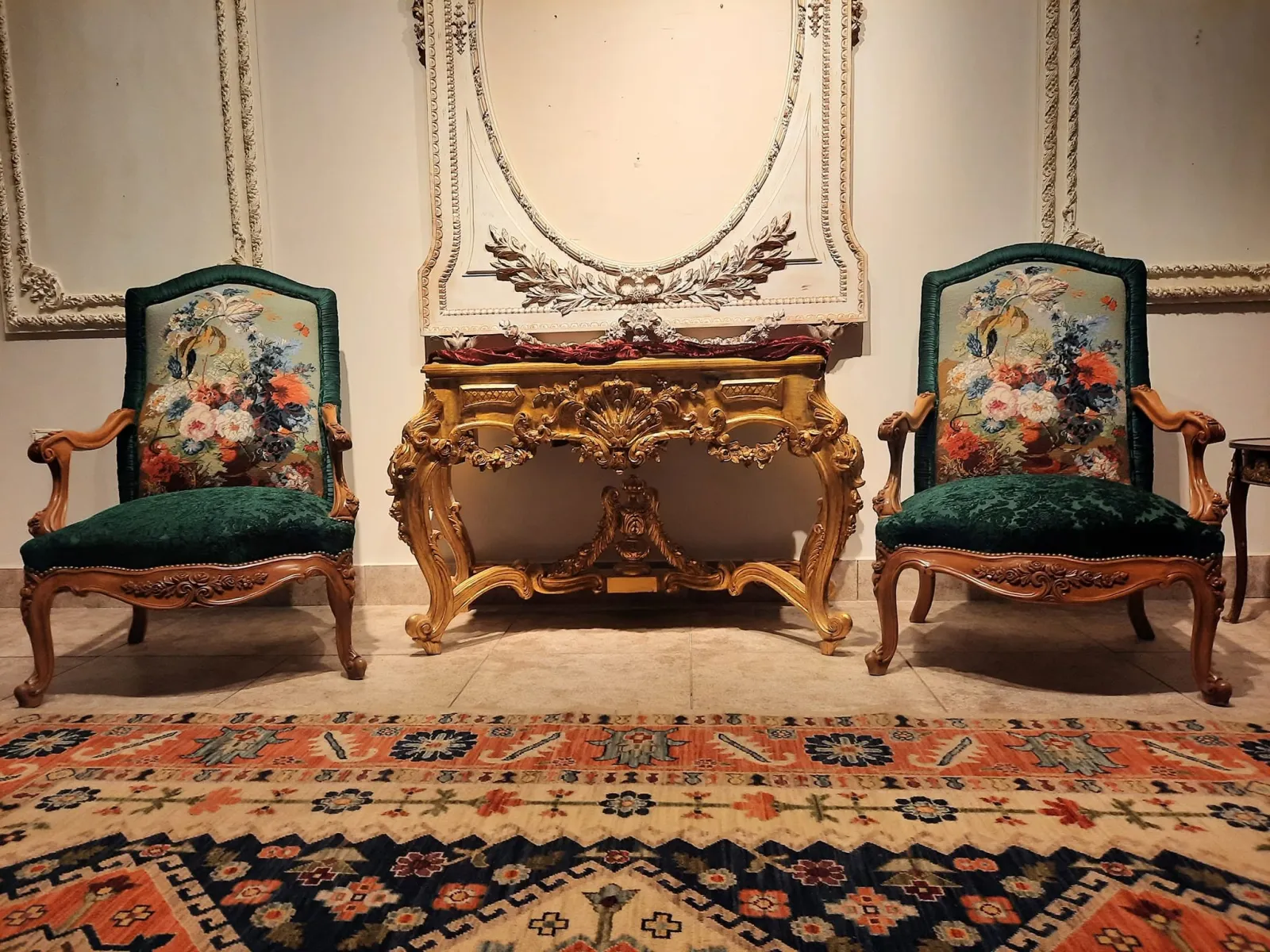
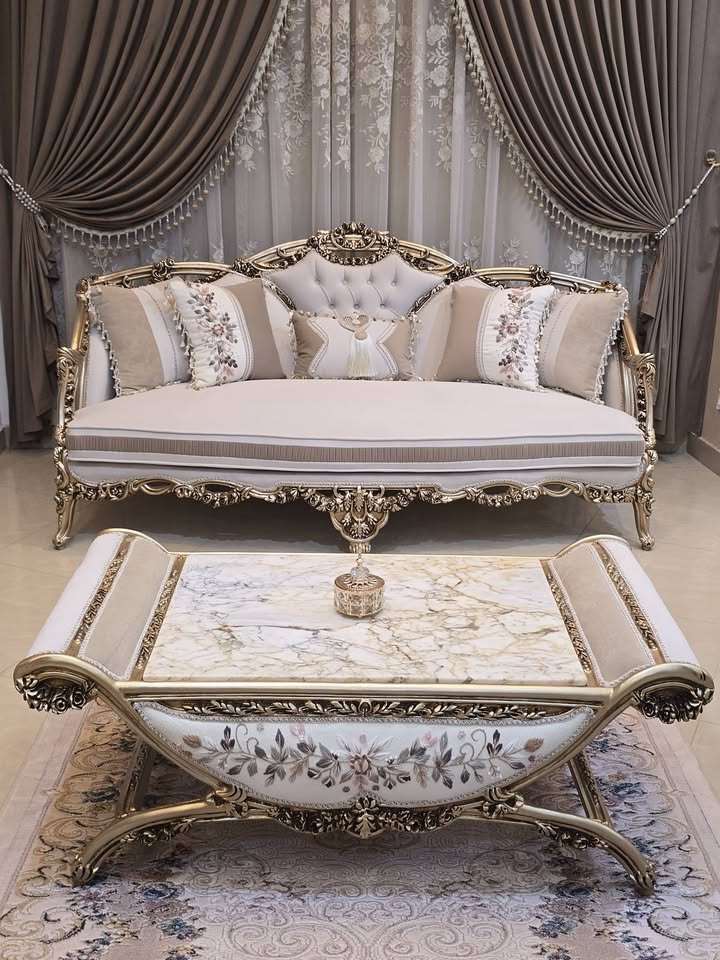
- Classic rooms suit medallion and ornate-border rugs in ivory, gold, burgundy and navy.
- Modern rooms suit plain textured rugs or calm geometric patterns.
- A light rug opens up the space but needs more care in living areas.
Plan the rug with the furniture
Rug size depends on the size of the sofas and tables, so it is best settled once the furniture layout is fixed. When furniture is made to the size of your space at Arti Design, the seating plan and rug positions can be worked out in a single layout, and a free survey visit can be booked to take measurements.